
Our Story.
The saree is the easiest garment in the world to fake, and the hardest to do well.
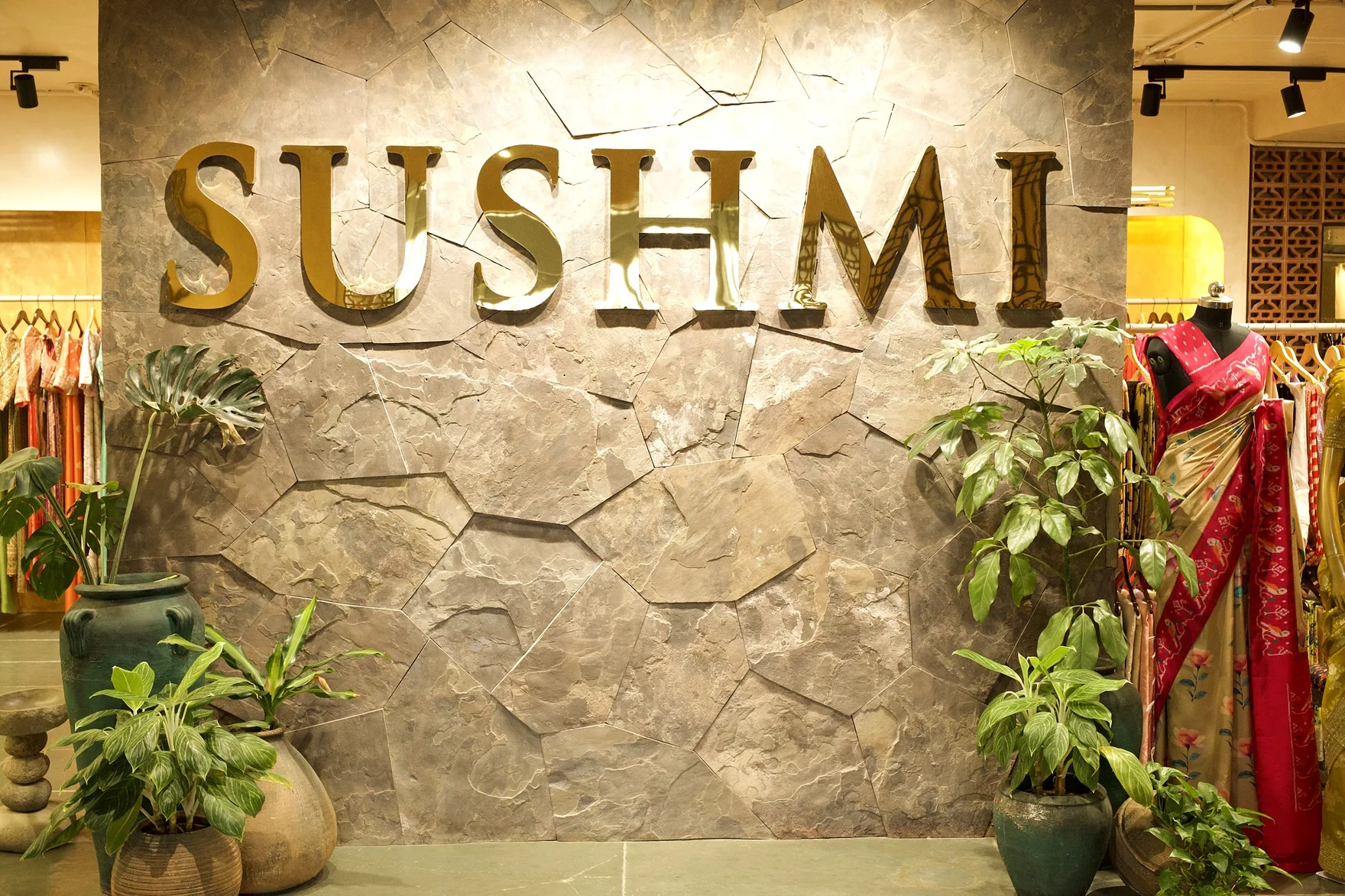
We have been doing this since 2014. We started small in the United States — a quiet online store, a limited collection, shipping mostly to Indian women in the diaspora who could not find good handloom anywhere closer. We were a different name then. Twelve years and several thousand customers later, the store is at Kokapet in Hyderabad — a 4,000 square-foot flagship — and the rebrand to SUSHMI is what you see now.
What hasn't changed in twelve years: the gap between the saree your mother folds carefully into the cupboard and the saree most websites ship you. We started this brand to close that gap. We are still closing it.
For the women before. For the daughters after.
Every saree on this site has lived a life before this one. The cotton came from a field that has been a field for two hundred years. The silk came from a worm whose ancestors made silk for an emperor. The takli wheel that spun the yarn has been turning in the same village since the sixteenth century.
We did not start any of this. We only make sure it does not stop.
Every Ponduru we sell pays a Lakshmi who spins it. Every Banarasi pays a Ramana who weaves it. Their daughters see that the work is worth doing. The loom keeps going. Six generations becomes seven.
A saree is the only thing your grandmother wore that you can still wear. Without breaking it. Without dating it. Without shrinking it in a wash. We do not take that lightly.
We travel for it.
There is no shortcut to a good saree. The looms that make them are scattered across India — Andhra Ponduru, Banaras, Patan in Gujarat, Kanjeevaram country in Tamil Nadu, Maheshwar in Madhya Pradesh, Bhagalpur in Bihar. Most do not have websites or warehouses. They have a master weaver, a workshop, and the looms.
We go where the cloth is. Train to Bhagalpur. Flight to Banaras. Five-hour drive into Srikakulam for the takli spinners of Ponduru. We pick up the saree where it was made, in the order it came off the loom.
What is on this site is the small percentage that earned the trip home.
Done in one place.
A saree is half a garment. The other half is the blouse, the fall, the pico edge, the courier, the message when it arrives.
In most stores, you buy the cloth and someone else figures out the rest. We didn't want to be that. Stitching, fall-pico, saved measurements, express shipping, and a real person on WhatsApp if anything is off — all done from one atelier in Hyderabad.
Built the way the saree is.
This site is not a Shopify template. We were on Shopify for years — like every other small saree brand — and we watched its limits get in the way of how we wanted to sell. Eventually we did what felt obvious. We built our own. Every page on this site, every API, every animation, every line of copy is ours. The same way a saree is one continuous weave from end to end, this is one continuous codebase from end to end. No off-the-shelf cart. No plug-and-play recommendation engine. No template anyone else is also using.
When you message us on WhatsApp at midnight, the assistant that replies in seconds was trained on every saree in our catalog and every customer conversation in our archive. It knows the price of every piece, the inventory of every weave, the status of your order. It hands off to a real person the moment the question needs one — and we answer.
We treated the website the way the weaver treats the cloth. Nothing automated that should be done by hand. Nothing done by hand that the cloth does not need.
A part of every sale.
A part of every saree we sell goes somewhere it should.
We work quietly with several organisations across Hyderabad and beyond. We send what they need from us. The work itself happens at their facilities, on their terms — not ours.
Every blouse, fall, and pico shipped to a SUSHMI customer is stitched by our own master tailors at our Hyderabad atelier. That side of the work has never been outsourced, and never will be. The two are kept separate on purpose.
Beyond those programmes, we pay for school books, school dresses, and the small things that decide whether a child in need stays in school or stops. The list of children we support is long, and growing. We do not keep a tally we publish.
This was the founder's personal commitment from the first sale, and it has stayed personal since. The percentage gets bigger as the brand gets bigger. There is no smaller-print version of that promise. We do not run discounts on it.
We're saying it on this page because if you bought a saree from us, you should know what a part of your money does.
What will not change.
Four things will not change here, no matter how big this gets:
- We will not call something handloom that isn't.
- We will not put a number on a saree that doesn't belong on it.
- We will not stop answering the WhatsApp message after the order has shipped.
- A part of every sale will keep going where it belongs. The percentage only grows.
— Sushmi